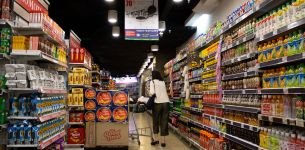
The adoption of a harmonised front-of-pack nutrition labelling (FoPNL) scheme has significant advantages from at least four perspectives.
Other content with the tag "Food labelling".

Being informed about the composition and harms of products intended for personal consumption should be a straightforward request.

Menu energy labelling has been implemented as a public health policy to promote healthier dietary choices and reduce obesity.
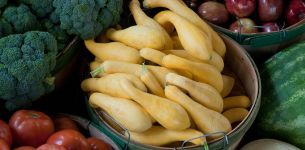
Food security is increasingly a societal concern, also in developed economies.

Environmental sustainability stands at the forefront of global issues, with many consumers changing their habits to reduce their carbon footprint.

Studying consumer behaviour towards food and nutrition labelling (F&NL) is increasingly becoming important across the world.
Unlike conventional foods, supplemented foods are prepackaged foods containing one or more added supplemental ingredients, such as vitamins, minera

In its Farm to Fork Strategy, published in May 2020, the European Commission committed to ‘propose harmonised mandatory front-of-pack nutrition lab

The fast-growing out-of-home consumption sector is responsible for monumental food waste.
This book explains how True Cost Accounting is an effective tool we can use to address the pervasive imbalance in our food system.
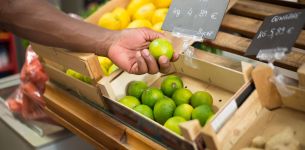
There is broad scientific consensus that current food systems are neither sustainable nor resilient: many agricultural practices are very resource-
Access to Nutrition Initiative (ATNI) has been commissioned to benchmark the world’s 25 largest food and beverage (F&B) companies’ lobbying-rel

This peer review paper argues that taking a healthy diet perspective, instead of a narrower production-focused approach, in food system transformat

This report from Bite Back 2030, in partnership with Livity and Action on Sugar, takes a look at how health claims on food products (which are ofte

Between 2018 and 2021, GAIN conducted research and consultations to assess and improve business accountability in nutrition.

Nutrition labels have become the norm for packaged foods in many countries, and can help consumers make informed food choices in terms of pers


The Health Star Rating is a front-of-pack labelling system that rates the overall nutritional profile of packaged food and assigns it a rating from

"We as communities, parents, governments, food corporations, marketers and global citizens have a collective responsibility to put childre

This study looks at how foods targeted towards children have changed between 2009 and 2017 in Canada.

The 44th edition of the UNSCN Nutrition - Food environments: Where people meet the food system - looks at how food env

Priobiotics have become one of the most popular nutritional supplements in recent years. This mini review paper shows that this is in part cau
This article looks at whether nutrition information on packaging affects online sales.
The amount of food people consume away from home is rising in the U.S.
This article looks at options for creating a communication and marketing strategy around food ingredients with “nutritional susta
The Global Alliance for Improved Nutrition’s Marketplace for Nutritious Foods program sparks private sector production and marketing of nutritious
The Global Alliance for Improved Nutrition’s Marketplace for Nutritious Foods program sparks private sector production and marketing of nutritious

The Committee on World Food Security is a collaboration of international agencies, civil society, and the private sector focusing on policy issues
This report produced by the UK Health Forum provides case studies from around the world to help provide a framework for governing public private in

This is a report from a workshop on communication and collaboration on public health and nutrition between the private sector, academia, government
This short video shows the successes of public private collaboration in South Africa.

This article in the British Medical Journal reviews strategies that governments can use to improve nutrition and health.
Unilever is driving change within the palm oil industry with a focus on more efficient land use and forest protection.

Industry leaders look at how consumer choices are driven by health, wellness, and sustainability.
Health gossip is rife in Indonesia.
Presentation for the Wellcome Trust looking at the role of policy on public food choices.

This brief from the Global Panel on Agriculture and Food Systems for Nutrition calls on both public and priva
The Access to Nutrition Index has produced a 2018 scorecard for Campbell Soup company.
It is far too easy to read expiration dates and food labels and err on the side of caution.

This paper reviews 41 workforce nutrition interventions published between 1995 and 2006 in the South African Journal of Clinical
The US Food and Drug Administration (FDA) regulates the addition of iodine to infant formulas, the iodisation of salt, and the addition of salt and
This book examines food fortification in all its forms.

Innovation has led to the world’s first food loss and waste calculator that instantly estimates the value of food loss and waste in terms of t

The global food fortification ingredients market was valued at US$ 30.50 Bn in 2016, and is expected to reach US$ 100.84 Bn by 2025.
An excellent example of public private engagement, FAO and
This report looks at supply chain waste based on Feedback's research on export supply chains in Peru, Senegal, South Africa, the UK and a majo
Tesco CEO, and chair of Champions 12.3, Dave Lewis, discusses what a target can do to help food waste in this special blog for The Grocer.

The Food Waste Atlas tracks the world’s food loss and waste across the entire food system.
"An innovation evolution is needed to maximize the future impact of food fortification," says Dipika Matthias, Senior Program Manager at the Gates